What Changed
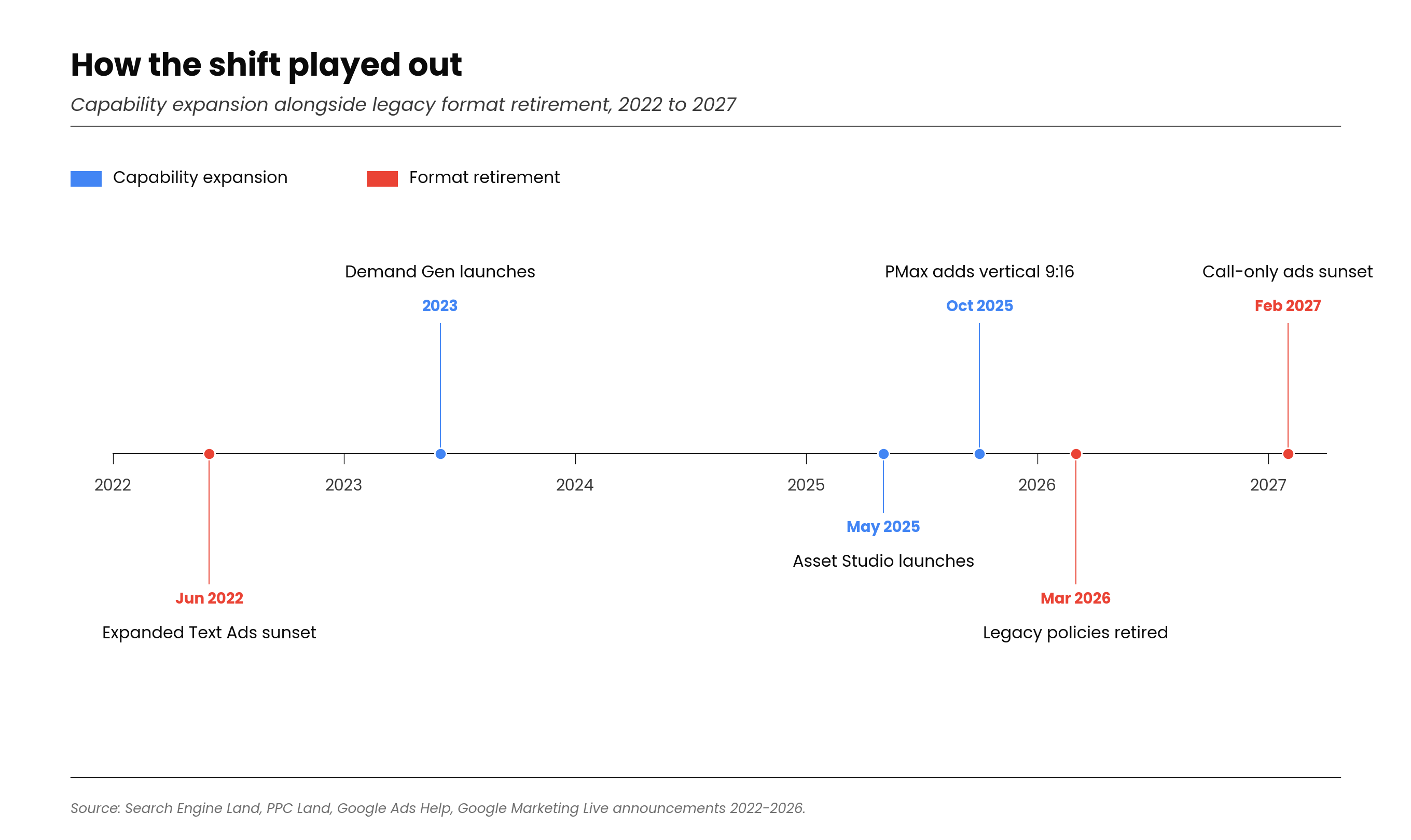
Over the past 12-18 months, Google has formalized a shift that started years earlier. In March 2026, Google retired four legacy ad format policies in a single sweep. Form ads, image quality, responsive ads, and text ads. Call-only ads entered phase-out at the same time. New creation was blocked in February 2026. Full sunset comes February 2027.
The retirement was largely cleanup. The formats it governed were already obsolete. Expanded text ads stopped accepting new creates back in June 2022.
Discovery campaigns were absorbed into Demand Gen in 2023. The March 2026 update was Google formally closing books on policies that no longer applied to anyone.
But the bookkeeping confirms where the platform has been heading. Capabilities have been expanding while legacy formats sunset. The pattern goes back five years.
System capabilities expanded at the same time. Google can generate, test, and distribute combinations of creative assets across more placements and formats than ever.
For highly automated campaign types like Performance Max, performance is driven by the quality and diversity of creative inputs. Manual targeting and account structure matter less. For Search, Shopping, and Demand Gen, account structure and incremental optimizations still pull weight.
Weak or repetitive inputs give the system nothing to work with. Strong, distinct inputs scale.
Creative Is Now a System
Most advertisers treat creative as the final layer. That order is backwards.
The system takes creative inputs, generates combinations, distributes them across placements, and learns in real time.
For PMax, the algorithm is increasingly capable of finding the right audience on its own. What it needs are better options to show them.
This applies unevenly. Search and Shopping performance still depends on account structure, query targeting, and incremental optimizations. Audience selection still matters for Demand Gen. Creative weight has gone up. Fundamentals haven't disappeared.
Google is making the shift visible inside the product. AI Max for Search now bundles search term matching, text customization, and final URL expansion into a one-click activation, with the recommendation showing up directly in the campaign UI.
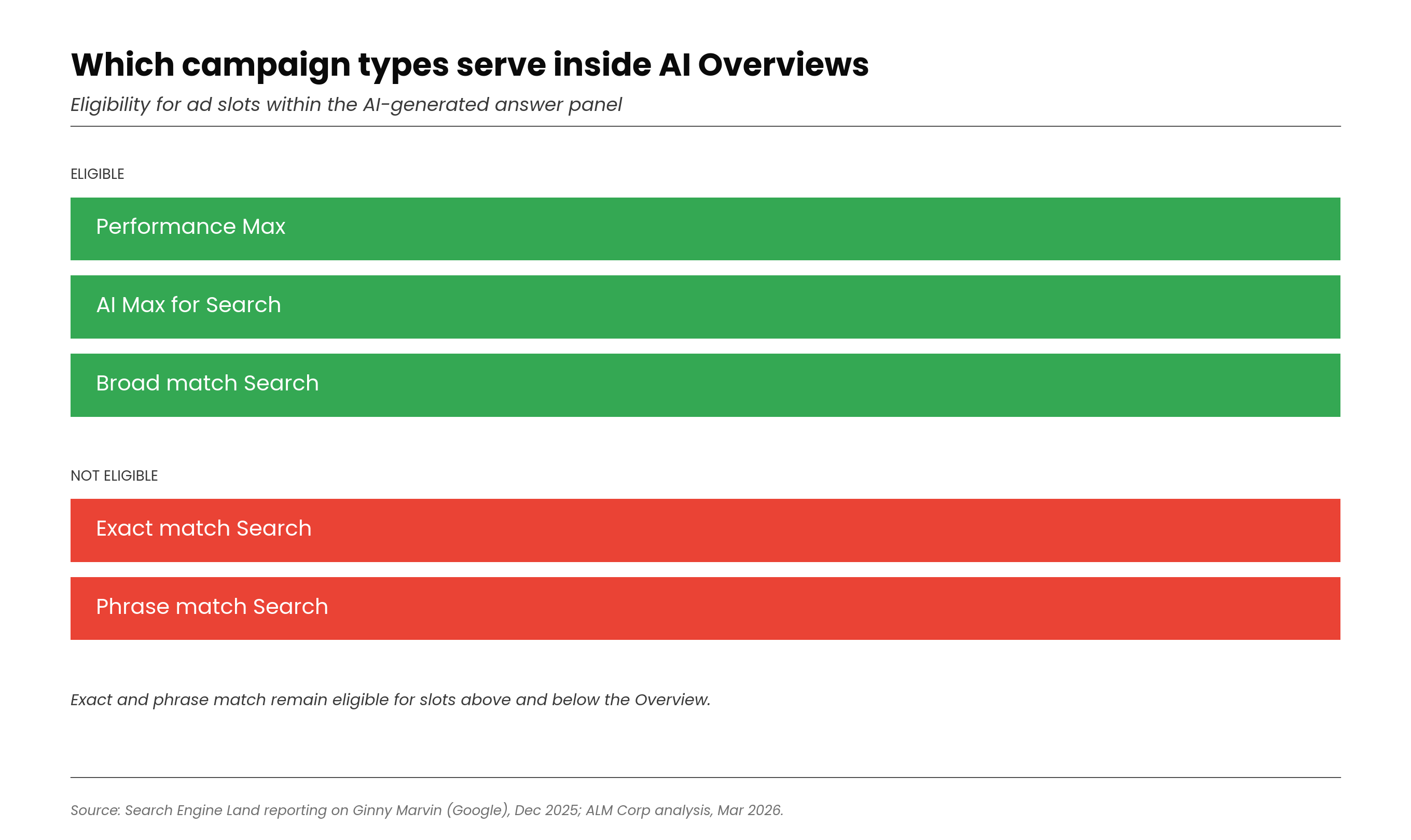
Inventory allocation reinforces the shift. AI Overviews and AI Mode now serve ads, and Google has tiered the eligibility. Above and below the Overview, exact, phrase, and broad match all compete. The slot inside the Overview is restricted. It only pulls from Performance Max, AI Max for Search, and broad match Search.
The more flexibility you give the system, the more of that premium inventory you reach. The real question is how much of the growing inventory you're positioned to capture.
Why Google Is Moving This Way
Every major product change points the same direction.
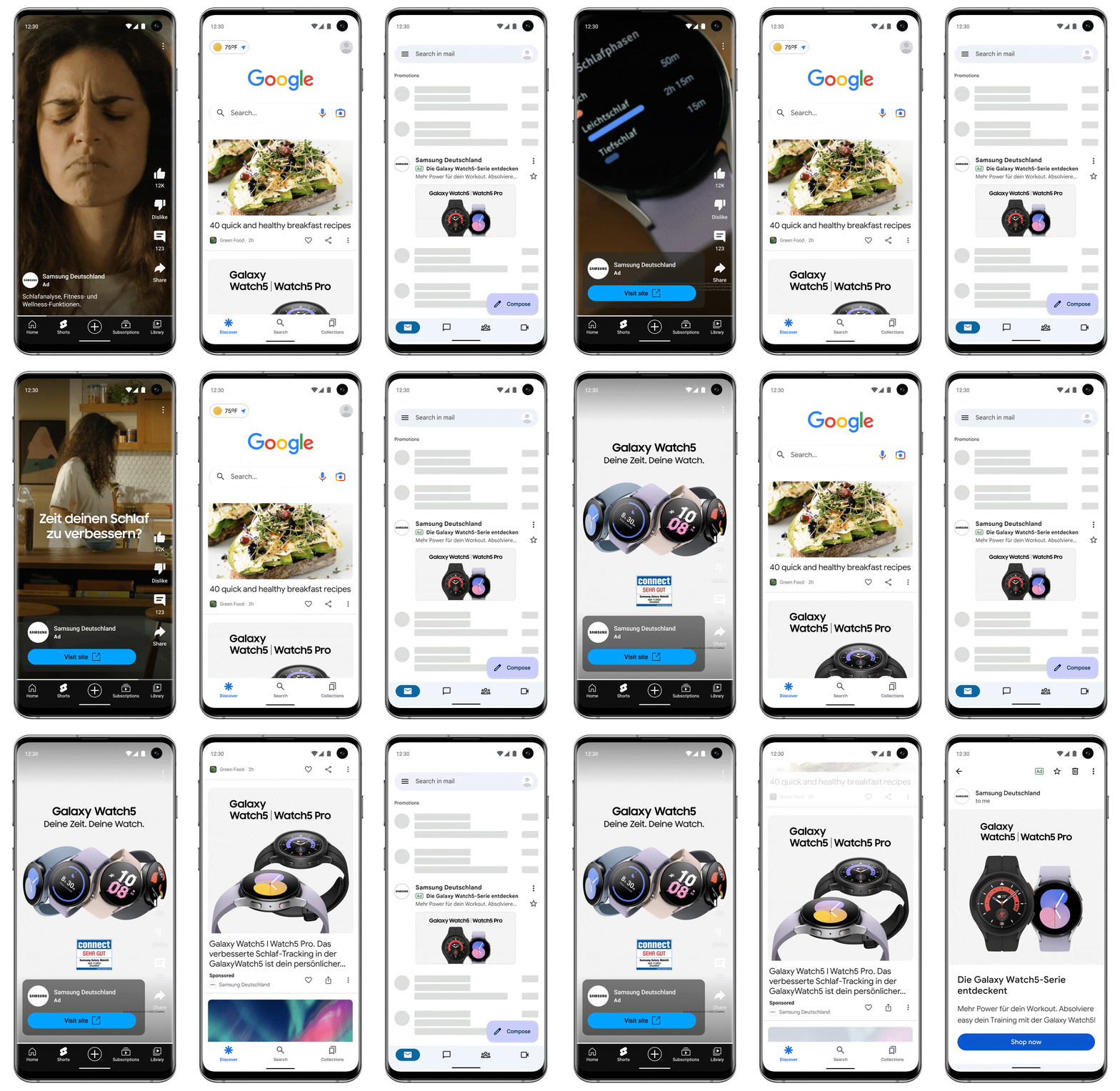
Demand Gen now operates across YouTube, Shorts, Discover, Gmail, and Display. That requires a broader creative mix.
Performance Max keeps expanding asset requirements. Google added native support for vertical 9:16 image ads in Performance Max in October 2025, the same Story Image format Demand Gen got earlier in the year.
Asset Studio launched in 2025 as a central creative hub. Google announced it at Google Marketing Live in May, rolled the beta to advertiser accounts in August, and added generative AI capabilities in September. The platform consolidates image generation, video creation, and bulk editing inside Google Ads.
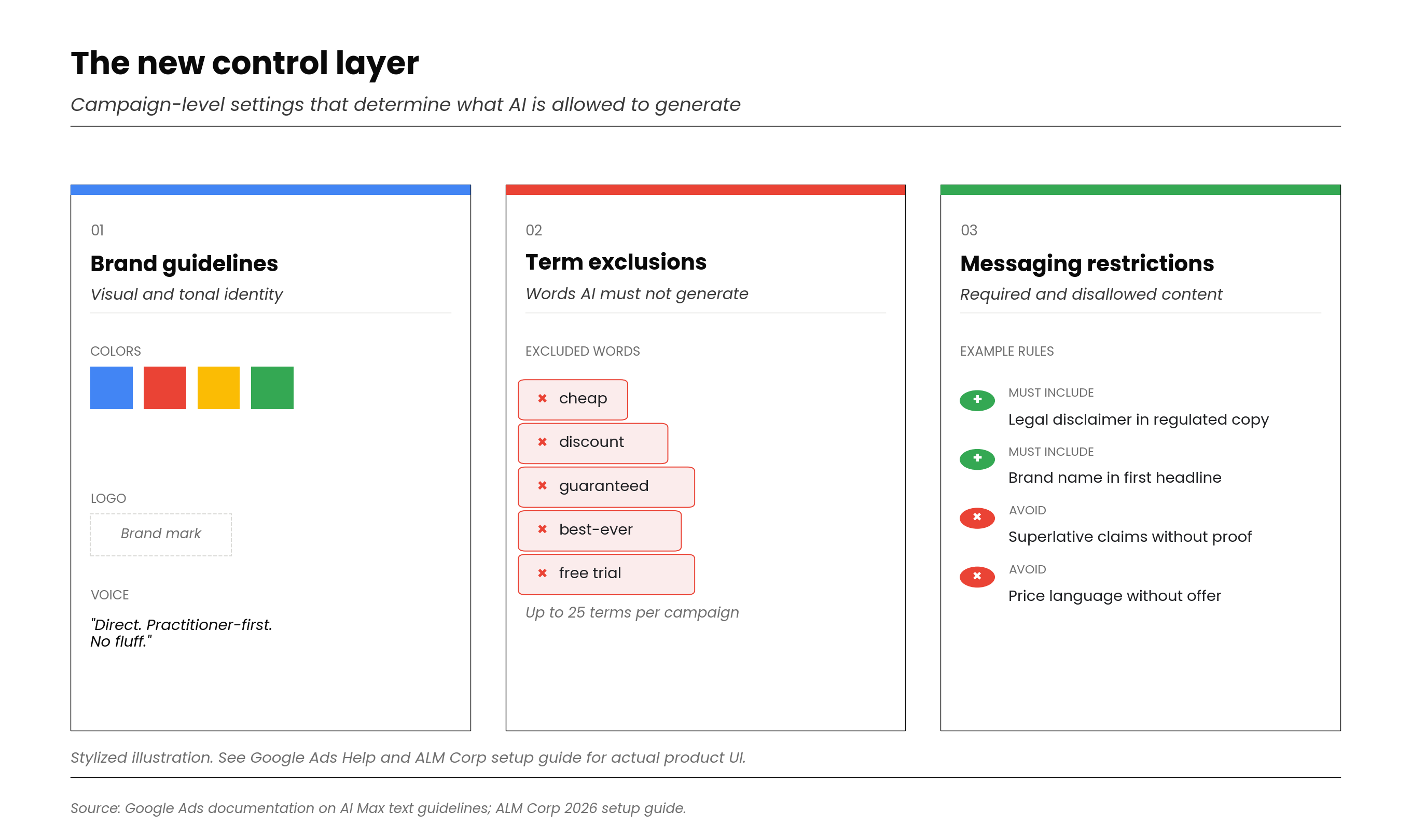
Google introduced brand guidelines, messaging restrictions, and term exclusions at the campaign level. The system can infer brand identity, colors, and tone from your website.
Google is increasing the scale of creative generation. It's also giving advertisers more control over the boundaries.
The system is expanding. Your role is to guide it.
The Mistake Most Advertisers Make
Most brands responded to these changes by producing more creative. More headlines. More images. More slight variations.
Wrong response.
The system needs contrast, not volume.
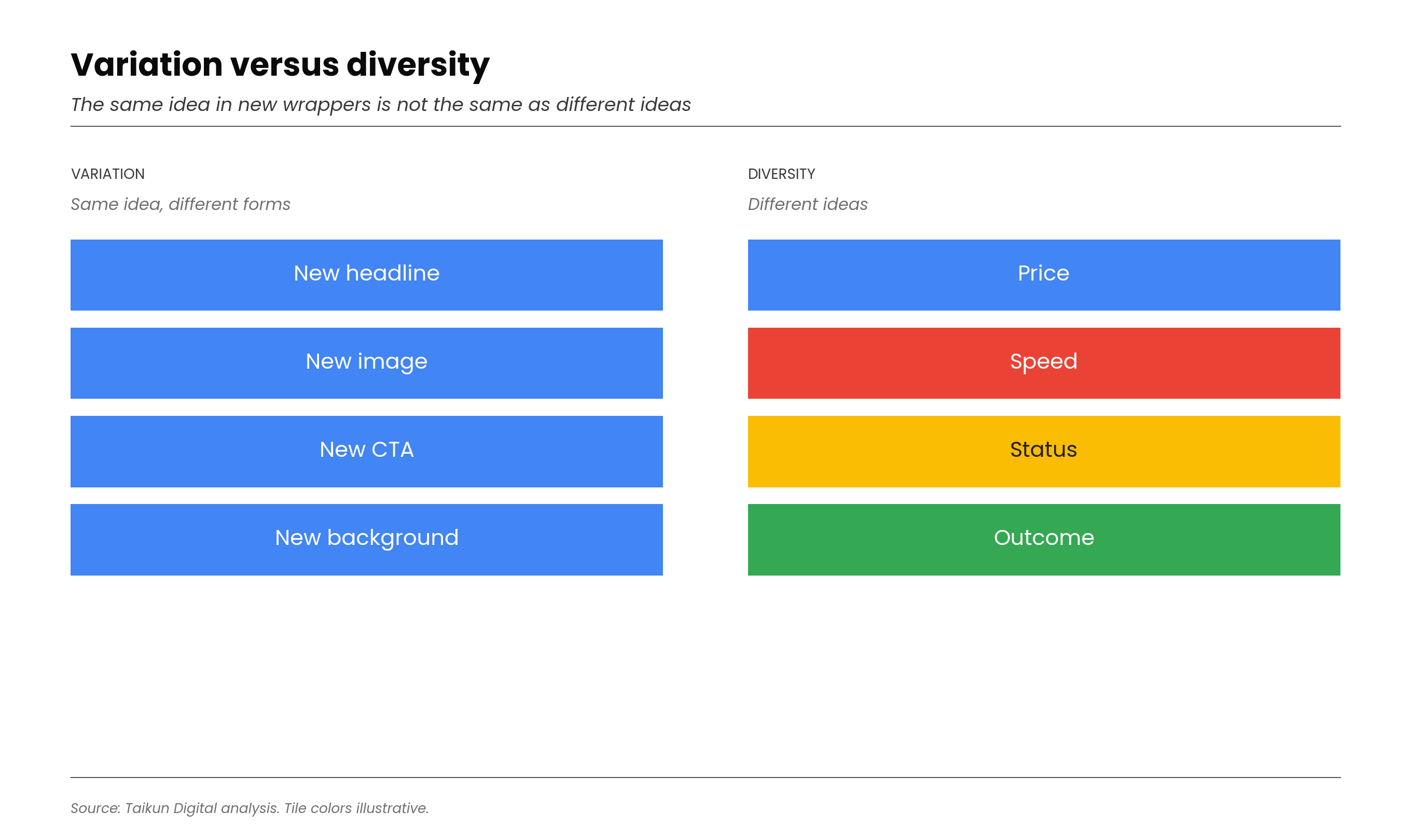
Variation is a new headline, a new background, a new CTA. It's the same idea wearing different clothes.
Diversity is a new message, a new angle, a new intent. It's a different idea entirely.
Struggling accounts have large volumes of assets that all say the same thing. They're repeating ideas, not testing them.
Scaling accounts look different. They explore distinct angles. Price. Quality. Speed. Status. Outcome. They use multiple formats. They differentiate the role of each asset.
The system rewards different ideas.
Stop hunting for the single best ad. Give the system multiple ways to win.
The Infrastructure Layer Most Advertisers Miss
Most teams focus on producing creative. Few build the infrastructure that controls how creative is generated.
Google has built a new control layer inside its ad system. Brand guidelines. Term exclusions. Messaging restrictions. Centralized creative management through Asset Studio. These features determine how the system behaves.
In an environment where AI generates combinations of messaging and creative automatically, manual optimization stops being the edge. Your edge is how clearly you define what the system is allowed to say, show, and prioritize.
Term exclusions cap at 25 per campaign. Messaging restrictions govern required and disallowed content patterns. Brand guidelines pin colors, logos, and voice. The settings are stackable, and they apply to every AI-generated asset that ships from your account.
Creative quality matters.
The guardrails around it matter just as much.
Format Is Strategy
Many advertisers still think in simple terms. Video or image. That's no longer enough.
Demand Gen operates across fundamentally different environments.
YouTube Shorts. In-stream video. Discover. Gmail. Display. Each has different user behavior, expectations, and creative requirements.
A single asset can't perform across all of them. Google now expects a multi-format approach by default.
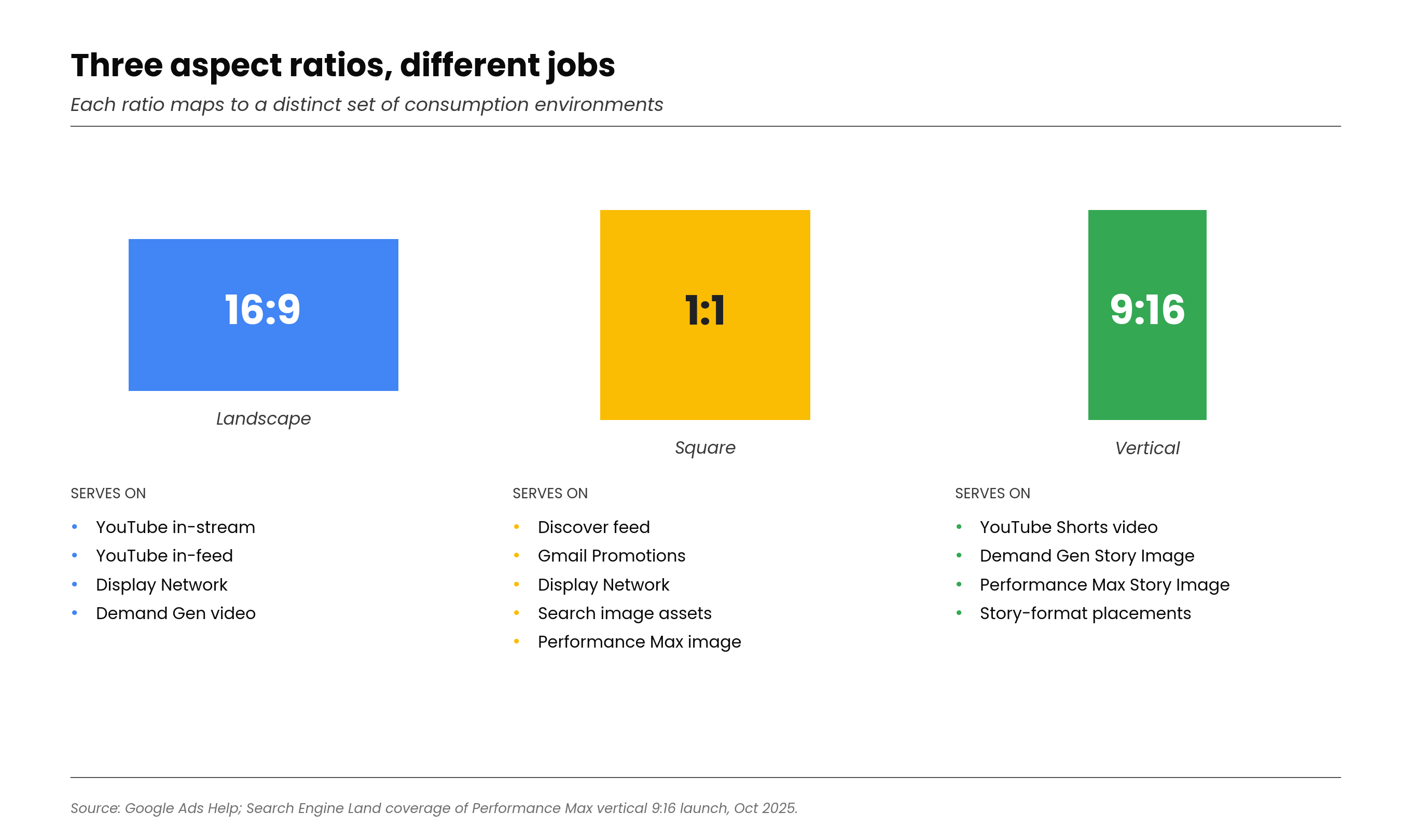
Vertical video is required. Performance Max added native support for 9:16 image ads in October 2025. Vertical video has been supported longer. Shorts keeps growing as a primary consumption format. Static imagery plays a different role in Discover and Display. Gmail placements rely more on headline-driven formats.
Google's own guidance now follows the rule of three: at least three images and three videos in each aspect ratio (vertical, square, and landscape) per asset group.
Repurposing one asset across placements doesn't work.
What This Means in Practice
Creative has to become a system, not a one-off task. Teams need a repeatable way to generate new angles, formats, and concepts.
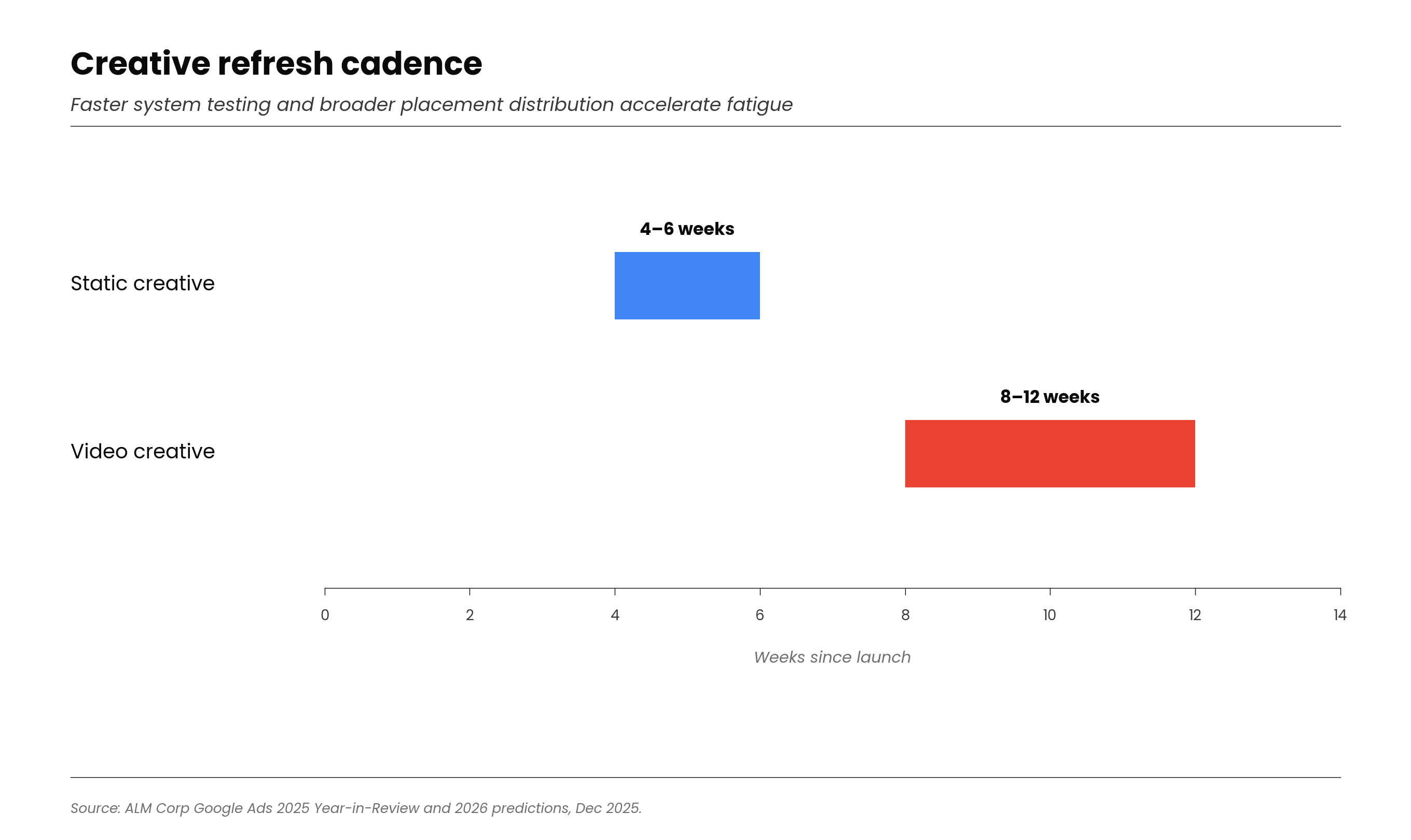
Refresh cadence matters. The system tests combinations faster and distributes them across more placements. Fatigue hits faster. Refresh static assets every 4-6 weeks. Refresh video every 8-12 weeks.
Brand governance is core infrastructure. Messaging restrictions and term exclusions keep AI-generated outputs aligned with your brand. This matters most in regulated industries.
Measurement is shifting too. Platform-reported metrics are getting noisier. Lean harder on incrementality, blended performance, and new customer growth.
Final Thoughts
In 2026, understand the pattern: performance is driven by the quality, diversity, and control of creative inputs.