Why Google Ads Is Paid Social's Best Friend
· Paid Social
There is a belief that has quietly cost a lot of brands a lot of money.
Google captures demand. Paid social creates it. Budget accordingly.
It is tidy. It is memorable. It is mostly wrong. And for brands trying to lower CAC and improve payback periods, it is an expensive oversimplification.
Both channels create demand. Both capture it. They just do it differently. And when you run them together with that understanding, they do not add. They compound.
The Purchase Did Not Begin with the Search
Most brands look at a Google conversion and think: that is where the sale happened. What they are actually looking at is the last visible footprint of a journey that started somewhere else, days or weeks earlier, probably on social.
YouTube pre-roll reaches buyers who were not searching for you. That is manufactured desire, not captured intent.
Demand Gen campaigns across YouTube, Discover, and Gmail function as a visual interruption channel. Advertisers put 192% more spend into Demand Gen in 2025. They are not doing that because it is not working. This year, according to a recent study from Haus, 80% of brands are increasing their YouTube spend (more on that at the end).
Performance Max and broad match find behavioral signals that exact match campaigns miss entirely. Earlier in the journey means lower CPCs and better margin per conversion.
Search and Shopping are still the most efficient closing tools in paid media. But they close a process they did not start. Treating Google as capture-only is like funding only the last yard of a hundred-yard drive.
One thing that rarely makes it into budget conversations: Google's impression-to-conversion cycle is long. A YouTube view today may not convert for 14 to 30 days depending on category and price point. Short attribution windows make Google look inefficient. What they are actually measuring is the tail end of a journey that started somewhere else, often on social. The capital deployed in week one is doing work that does not show up in the dashboard until week three or four.
Phil Kiel, our Director of Paid Social: "Google Search is where my social spend goes to get paid. Every awareness campaign I run on Meta is building the audience that shows up in your branded searches a week later. The question is whether someone on the Google side is funded well enough to catch it."
The Best Closing Tool in Your Stack Is Dressed Like an Awareness Channel
Paid social got a reputation as the channel that starts conversations. Nobody talks about how often it finishes them.
- Dynamic product ads target cart abandoners and product page visitors. That is existing intent being closed, not new demand being created.
- Sequential retargeting moves warm buyers through consideration in stages. Upper funnel. Mid funnel. Abandoned cart. That is a closing system running inside one channel.
- Email acquisition campaigns and branded retargeting sit at the bottom of the funnel. Paid social works across the entire journey depending on how you deploy it.
The most efficient spend in a lot of accounts is hiding in the warm audience campaigns that nobody talks about at a quarterly review.
The Math That Changes the Meeting
When Google and paid social run together with intention, CAC does not stay flat. It falls. Brands running coordinated Google and paid social strategies consistently report 15 to 20% lower CPAs compared to brands running either channel alone.
That gap does not disappear over time. It widens.
Here is the mechanism:
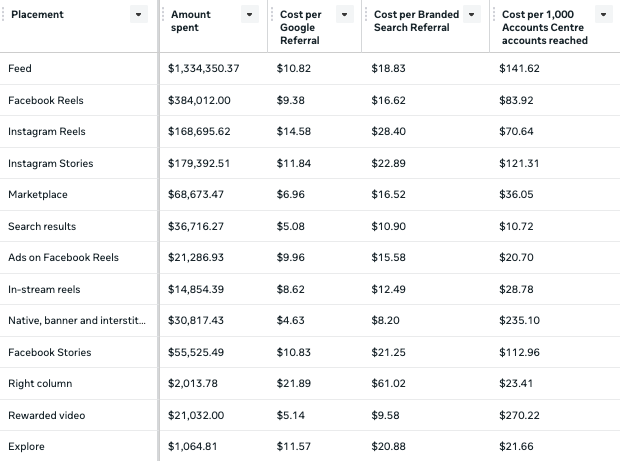
- Paid social drives branded search volume. We recently found that Meta ad exposure drove a 10.4% average increase in Google search volume across our portfolio. Branded searches convert at a fraction of the cost of non-branded. More branded volume means lower blended CAC without changing a single bid.
- Customers acquired through multiple touchpoints carry higher LTV. A buyer who encountered your brand on social, searched it on Google, and converted through Shopping has a longer and more intentional purchase history than a single-channel buyer. Cross-channel acquisition tends to produce better customers, not just more of them.
- Incrementality improves because each channel generates lift the other cannot produce alone. We have seen, via our partner at Stell, that the 22.3% lift in search/shopping visits that comes from running full-funnel social is incremental revenue. It does not exist without the upstream social investment. That lift has a dollar value that never shows up in either platform's reporting.
Phil Kiel: "When I show a client that their Meta spend is generating Google searches, the CAC math changes. Suddenly the cost of a social impression has downstream value we were not attributing. The true CAC on a cross-channel acquisition is almost always lower than either platform reports on its own."
Last-click attribution makes the final touchpoint look like the whole story. So brands underfund the channels that built the demand and concentrate budget on the one holding the match at the end. The reported ROAS looks clean. The growth ceiling arrives faster than it should. And nobody connects the two.
Where Efficient Brands Do It Differently
Three things worth building into the plan:
- When paid social scales, protect Google. Scaling social increases branded search volume. Cutting Google budget at the exact moment demand is rising means paying to create intent and handing the conversion to a competitor.
- Evaluate blended performance, not channel performance. Per-channel ROAS is a diagnostic. It is not a capital allocation framework. The question is what the combination returned on total investment and what the LTV of those customers looks like over 90, 180, and 365 days.
- The compounding takes time to show up clearly. PMAX and Demand Gen accumulate conversion signals over months, not weeks. Search quality scores improve as brand familiarity lifts click-through rates. Social lookalikes sharpen as purchase data grows. Brands that reallocate budget before the flywheel fully spins never see the return that was 60 days away.
Both channels create demand. Both capture it. Run both, measure the combination, and watch your unit economics do something neither channel could manage alone.